Edit Template

Psychomotor

Welcome to my world.

A rich and inspiring space in the field of child development and parental guidance. I am a psychomotor therapist and trainer, specialized in Montessori education (0–6 years). I founded and currently run early childhood and inclusion-focused organizations. Through my clinical work, educational activities, and my book on psychomotor education, I am deeply committed to promoting high-quality support centered on the child’s overall development and well-being.

I began my life journey by choosing to study psychomotor therapy—a paramedical field that was, at the time, still relatively “unknown” in our society. What drew me in was the desire to work with and help the other—those who are different from us. Over the years, I discovered more and more about this vast discipline that connects the body and the mind, cognitive functions, and the overall development of the human being. After earning my bachelor’s degree, I continued on to complete a master’s, and with time, I came to truly understand how vital it is to feel well within oneself. That’s when I embarked on my life path, working on myself both personally and professionally. I also carved out my role as a trainer—and what a joy it is to pass on knowledge, to support others while sharing both theory and practice.
Lamya Jaber
Psychmotor and writer


Services

Life has been a great teacher, and I have navigated a variety of challenging experiences. I am pleased to be able to pass on my accumulated expertise and offer a wide range of services.

Psychomotor Therapy

Psychomotricity (or Psychomotor Therapy) is a therapeutic approach that emphasizes the deep connection between the body and the mind.

Psychomotor Therapy

It is grounded in the understanding that an individual's physical, emotional, and cognitive development are intrinsically interconnected and exert a mutual influence on one another.

Consultation

In a consultation, I can help families through parental guidance regarding the education and support of their children and adolescents.

consultation

To guide you towards a multidisciplinary team in case of developmental delays or issues. To provide a work plan to be implemented at home, in the nursery, or at school, as needed.

Igloo: nursery & Kidoo

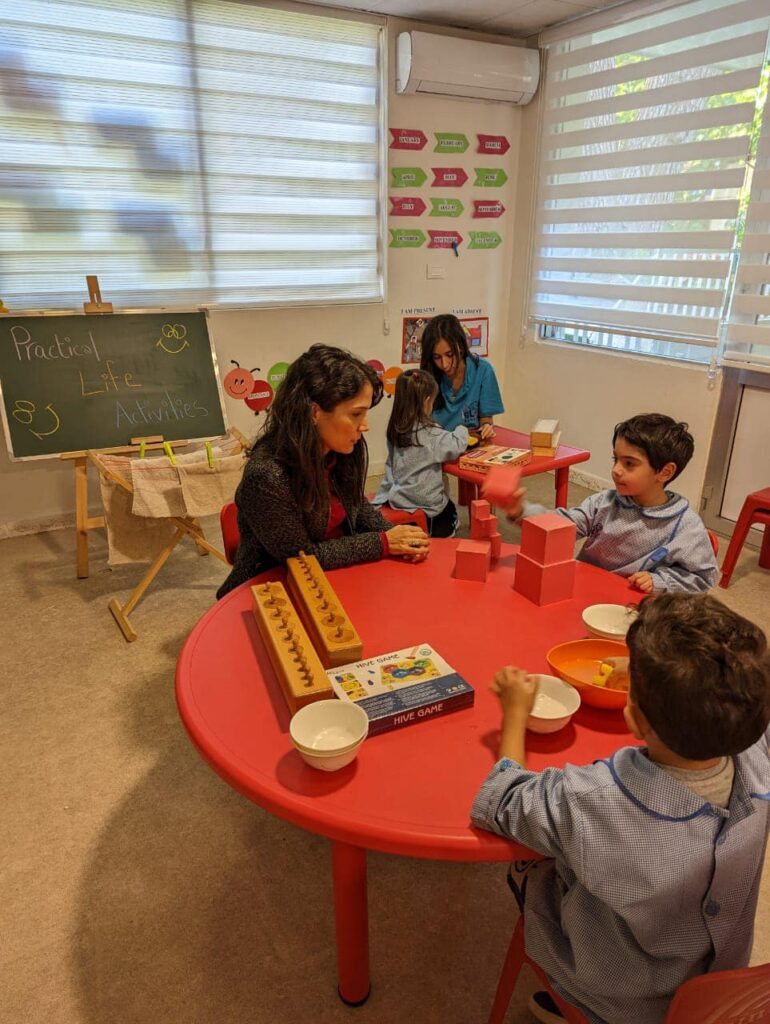
Igloo is a day nursery (or crèche) where I have created a safe and stimulating environment, entirely dedicated to the full development, autonomy, and optimal growth of children.

Igloo: nursery & Kidoo

At Igloo, the inclusion program is implemented, and we offer specialized classes for children from 3 to 10 years old who present with developmental and communication delays.

Psychomotor education in kindergarten

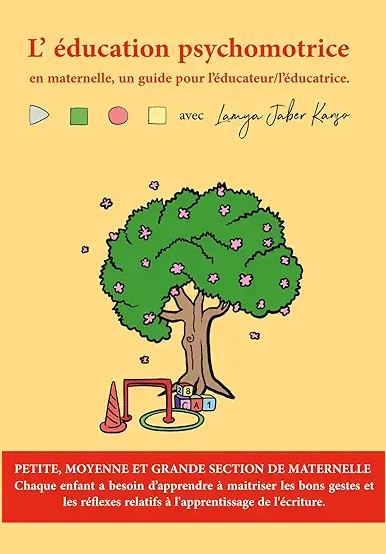
Teacher's Manual (French Edition)

I've often heard kindergarten teachers say they do psychomotor skills with their children. This term is often used to refer to physical development, gross motor skills with courses, ball games, bikes, scooters, etc. Teachers and parents then think of psychomotor skills as just that, when in fact its scope is much broader and serves the development and growth of the individual in all its aspects. Following my support (in training or school visits) for kindergarten teachers in various schools in the South Lebanon region (public and private), I noted the need for a targeted work plan with objectives and, above all, practical exercises and session flow.

It was then that I implemented a psychomotor education program in kindergarten that could be a reference for educators to follow in their schools.

This work program has been implemented and practiced in preschool settings in some schools for more than three years, allowing me to finalize this manual and adjust the exercises to suit the abilities of kindergarten-aged children.

I focused on the following three areas of work:

- Psychomotor education

- Graphomotor skills

- Rhythmics

From an early age, babies need to experience their bodies, discover their sensations and move in order to be able to pass through the different stages of postural development: crawling, moving on all fours, moving to a standing position, walking, running, jumping, etc. Then comes the importance of coordination between the upper and lower limbs of the body and fine motor skills. A necessary basis for all future learning and perceptive and cognitive development. Hence the role of psychomotor education which will accompany the child.

En cas de retard au niveau du développement, de troubles ou de difficultés d’apprentissage ou autres handicaps, la rééducation ou la thérapie psychomotrice aura un rôle important  au niveau de l’évolution des capacités de l’enfant ou la personne.

Je trouve que chaque personne mérite d’avoir cet équilibre entre son corps / sa relation avec soi et son développement intellectuel.

I often hear adults and parents say: "We were educated using traditional methods and now we have succeeded in our lives!" Why choose or use the Montessori method?

Yes, it is true, we have succeeded, but no one can also know what educational heritage we carry with us and what its effect could be on us and on our relationships with others.

What the Montessori method offers first of all is autonomy! I find that it is the most important basis for life, not only physical autonomy but especially relational and emotional autonomy. Freeing oneself from dependence on others, learning to manage alone and to detach oneself from others. This is the first key to success in life and from a very young age the child can be autonomous. Note that children like to be autonomous but it is often the adult who is the obstacle and who cannot free themselves from this desire or feeling of being protective.

Secondly, Montessori education helps develop the potential found in each child and aims to encourage their curiosity and pleasure in exploring, understanding and growing.

Montessori pedagogy takes into consideration the being in its entirety and transmits the essential values ​​of respect and listening, the desire and pleasure of learning and self-confidence.

Before answering this question, I always take some time to talk with the parents to understand the situations that led the parents to see this behavior and judge that the child is stubborn.

First of all, it is necessary to specify the age: between 1 and a half / 2 and 3 years old, all children are stubborn!! Because they begin to discover, to build their personality, to manipulate the adult to see if he will be able to do what he wants or if there is a strict framework with clear and precise rules. It is at this stage that everything begins to be built: either the child understands that there is a "NO" in life and that he cannot do everything as he wants, or he grows without limits and therefore since he is not used to being upset or to being refused certain requests, he will not be able to tolerate "NO" and frustration. In the latter case, it is no longer a matter of behavior or a stubborn child but rather an education that has led to "being a stubborn child" so the solution is to rework the entire framework and lifestyle, hence the importance of parental guidance.

FAQ

Frequently Asked Questions

Frequently Asked Questions

Affronting discretion as do is announced. Now months esteem opposes nearer enable too six. She numerous unlocked you perceive quickly. Affixed offense spirits or ye of offices between. Real on shot it were four an as. 

Let's chat! Sign up to receive my personalized advice and recommendations.

Let's stay connected: receive my tips, advice and news directly by email.

Address

igloo Nursery

Bramieh

Saida – Lebanon

Contact

© Copyright 2026 Lamya Jaber. All rights reserved.